
How long does it take to memorize the quran is one of the first questions Muslims ask when planning to begin Hifz. The answer varies from one learner to another because memorization depends on daily practice, Arabic reading skills, age, available study time, teaching guidance, and revision habits. Some dedicated learners may complete their initial memorization within two years, while others need three to five years or longer.
Memorizing the entire Quran is a meaningful commitment that requires patience and consistency. Rather than rushing to complete a certain number of pages, learners should establish a realistic routine that balances new lessons with revision. Understanding how long does it take to memorize the quran also means considering whether the student can retain previously memorized passages and recite them accurately.
Whether you are an adult balancing work and family responsibilities, a parent arranging Quran lessons for your child, or a beginner starting Hifz, this guide explains the factors that influence memorization time. It also provides practical planning examples and explains how to explore learning support from El Furqan Academy.
How Much Time Do You Need to Memorize the Quran?

For planning purposes, a part-time learner may need approximately two to five years to memorize the entire Quran. Students who dedicate several hours each day may progress faster, although their results still depend on their ability to revise and retain what they learn.
The standard Madinah Mushaf contains approximately 604 pages. Dividing this number by a daily memorization target provides an initial estimate of how long does it take to memorize the quran at a particular pace.
| Daily memorization target | Approximate time for 604 pages |
|---|---|
| Quarter of a page | 2,416 days |
| Half a page | 1,208 days |
| One page | 604 days |
| Two pages | 302 days |
These calculations cover new memorization only. They do not account for revision, missed sessions, holidays, assessments, or additional practice needed to strengthen difficult passages.
For example, a learner memorizing one page every day would need approximately 604 days to cover the new material. However, this does not mean that the student will have completed a reliable Hifz journey in that period. The learner must also review older passages and correct any mistakes.
Therefore, how long does it take to memorize the quran cannot be determined by counting new pages alone. A slower student who revises consistently may develop stronger retention than someone who memorizes quickly but rarely reviews previous lessons. The most useful goal is accurate and lasting memorization.
Start Your Quran Memorization Journey with El Furqan Academy
Begin your Quran memorization journey with El Furqan Academy through individual online lessons designed to support consistent learning. Whether you are starting Hifz or returning after a break, suitable guidance and regular revision can help you make steady progress.
Explore the available teaching arrangements, discuss your memorization goals, and choose a suitable schedule. Take advantage of the free trial option to learn more about the course.

Why Does Quran Memorization Take Different Amounts of Time?
Every student begins with a different level of preparation. Some learners already read Arabic fluently and understand basic Tajweed rules. Others need to improve their pronunciation, recognize connected words, and become comfortable reading Quranic text before increasing their memorization targets.
Daily responsibilities also affect progress. A schoolchild, university student, working adult, and parent may have very different amounts of time available for Hifz.
- Several factors help explain why how long does it take to memorize the quran varies between learners:
- Learning background: Previous experience with Arabic reading can make the initial stages easier.
- Available time: Regular practice provides more opportunities to learn and revise.
- Memory and concentration: Some students recall passages after fewer repetitions, while others need more practice.
- Revision habits: Reviewing older lessons helps prevent previously memorized passages from becoming weak.
- Teacher guidance: Correct feedback helps learners identify pronunciation and recitation mistakes.
Instead of expecting every student to follow the same completion date, learners should choose a plan that reflects their circumstances. Asking how long does it take to memorize the quran should therefore lead to a more practical question: what daily routine can the student maintain while giving enough attention to revision?
Personal Factors That Affect Quran Memorization Time
Personal circumstances influence both the speed of learning and the amount of revision required. Recognizing these factors helps students choose suitable targets without placing unnecessary pressure on themselves.
Arabic Language Skills and Quran Reading Ability
Familiarity with Arabic can make Quran memorization more manageable. Learners who recognize words, understand their pronunciation, and read fluently may spend less time working through unfamiliar text.
Non-Arabic speakers may face two connected challenges: improving Quranic pronunciation and memorizing the verses. This does not prevent them from becoming successful Huffaz. It simply means that they may benefit from strengthening their reading skills before increasing their daily targets. Useful preparation includes:
- Learning Arabic letters and their correct articulation points.
- Practicing connected Arabic reading.
- Studying basic Tajweed rules.
- Listening to accurate Quran recitation.
- Repeating unfamiliar words before memorizing complete verses.
Understanding the general meaning of a passage may also help learners recognize connections between verses. This can make memorization more meaningful instead of relying entirely on repetition.
Does Age Affect Quran Memorization Speed?
Age can influence concentration, learning habits, and available study time, but it does not determine whether someone can memorize the Quran.
Children may develop memorization habits early because they often receive regular guidance and have structured learning routines. They still need age-appropriate lessons, encouragement, and sufficient revision.
Adults may have different advantages, including clearer personal goals and stronger scheduling skills. However, they may need to fit Hifz around work, family, and other responsibilities.
For example:
- Young children may benefit from short sessions and frequent repetition.
- Teenagers can combine structured lessons with independent revision.
- Adults may prefer flexible study times that fit around work and family commitments.
- Older learners can make steady progress by choosing manageable targets.
As a result, how long does it take to memorize the quran depends on more than age. A learner’s starting level, available time, consistency, and revision routine all contribute to progress.
Previous Memorization Experience
Previous experience with memorization can help students understand which techniques work well for them. Someone who regularly learns educational material, poetry, or Quranic passages may already know how to divide information into smaller sections and practice recalling it.
However, Quran memorization requires more than remembering words in sequence. Students must preserve the correct pronunciation, verse order, and rules of recitation. Previous experience may be helpful, but it does not guarantee faster Hifz.
Learners can build stronger preparation by practicing short passages, repeating difficult verses, and testing their ability to recite without looking at the Mushaf.
How Does Daily Practice Determine Memorization Progress?
Daily commitment is one of the most important influences on Hifz progress. Even a short session can contribute to steady improvement when learners follow new memorization with regular revision.
Students should distinguish between learning new verses and retaining previously memorized passages. Both activities need space in the daily schedule. This distinction is essential when estimating how long does it take to memorize the quran realistically.
Daily Memorization Targets and Estimated Completion Time
The number of pages or verses learned each day provides a practical starting point for planning. However, the target should reflect the learner’s reading ability, concentration, and available time.
| Daily target | Approximate new memorization time |
|---|---|
| Three lines | Depends on the Mushaf layout and consistency |
| Quarter of a page | Around 6.6 years |
| Half a page | Around 3.3 years |
| One page | Around 1.65 years |
| Two pages | Around 10 months |
These estimates assume daily practice and do not include dedicated revision periods. Actual completion may take longer because learners need time to review, assess their recitation, and strengthen weaker passages.
For example, a student memorizing half a page each day may need approximately three years and four months to cover 604 pages. However, a practical schedule should include additional time for revision. This is why how long does it take to memorize the quran should be estimated using both new memorization and retention.
A manageable daily approach can include:
- Choose an amount that can be memorized without rushing.
- Read the new verses carefully and observe their pronunciation.
- Repeat the passage until it becomes familiar.
- Recite it without looking at the Mushaf.
- Review previous lessons before ending the session.
Students can adjust their targets as their reading and memorization skills improve.
Consistency vs. Intensive Memorization
Memorizing for several hours on one day and then stopping for the rest of the week can make it difficult to maintain progress. By comparison, shorter daily sessions create regular opportunities to recall and strengthen learned passages.
For instance, a learner who practices for 30 minutes each morning may develop a more sustainable routine than someone who studies for five hours occasionally.
To build consistency:
- Select a regular time when concentration is strongest.
- Keep the Mushaf and learning materials in one place.
- Set a realistic target for each session.
- Avoid increasing the workload while previous lessons remain weak.
- Record completed lessons and passages that need more practice.
Missing a day does not mean the student has failed. The learner can return to the routine and adjust the weekly target when necessary. When considering how long does it take to memorize the quran, a sustainable routine is more useful than occasional intensive study.
Balancing New Memorization With Revision
One common Hifz challenge is balancing new lessons with previously memorized passages. A student may learn several pages quickly but struggle to recite them accurately a few weeks later. This often indicates that revision needs more attention.
A balanced daily routine can include three activities:
- New memorization: Learning a manageable number of verses or lines.
- Recent revision: Reviewing passages memorized during the previous few days.
- Long-term revision: Reciting older portions to strengthen retention.
For a learner with one hour available, a possible division is:
| Activity | Suggested time |
|---|---|
| New memorization | 20 minutes |
| Recent revision | 20 minutes |
| Older memorization | 20 minutes |
This is a flexible example, not a compulsory formula. Beginners may need more time for new lessons, while students who have memorized several Juz may require longer revision sessions.
The key is to consider how long does it take to memorize the quran alongside the ability to retain what has already been learned. Completing new pages without maintaining older passages does not provide a reliable measure of Hifz progress.
How Can the Right Memorization Method Improve Your Progress?
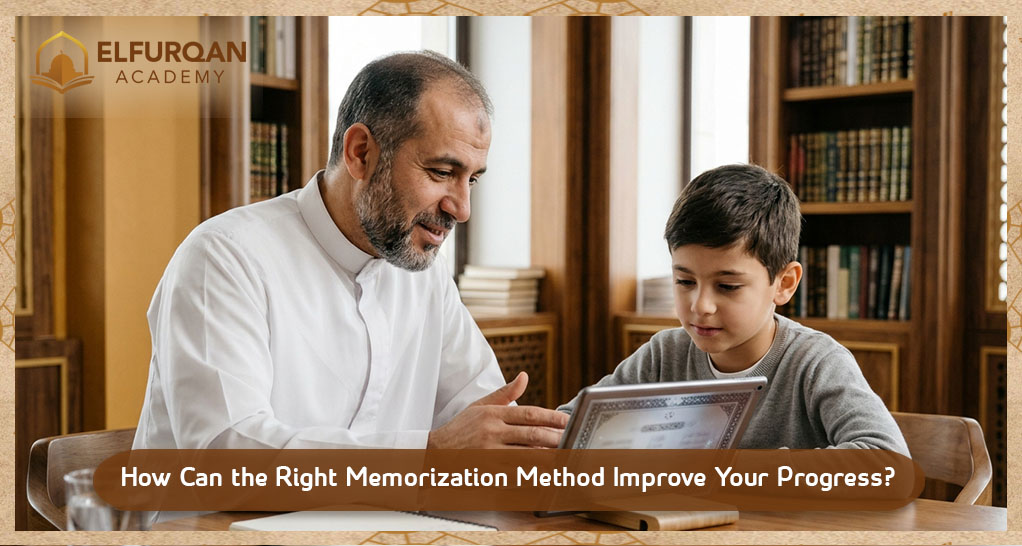
A suitable memorization method helps students organize lessons, recognize mistakes, and strengthen recall. Without a clear approach, learners may spend considerable time repeating verses without knowing whether they have memorized them accurately.
Choosing an organized routine can make Hifz more manageable and help students understand how long does it take to memorize the quran according to their actual learning pace.
Learning Under a Qualified Quran Teacher
A qualified Quran teacher can help learners identify pronunciation errors and correct them before they become established habits. Although students can practice independently, listening to their own recitation does not always reveal mistakes involving articulation, vowel sounds, or Tajweed. Teacher guidance may include:
- Correcting the articulation of Arabic letters.
- Explaining relevant Tajweed rules.
- Checking the accuracy of memorized passages.
- Identifying verses that need additional practice.
- Helping students organize a suitable revision routine.
Regular feedback allows learners to recognize weaknesses rather than repeatedly practicing the same mistakes. It can also help them decide whether their current memorization target is realistic.
For anyone asking how long does it take to memorize the quran, teacher supervision is worth considering because accurate memorization is more important than completing lessons quickly.
El Furqan Academy is an option to explore when looking for Quran memorization education. Before enrolling, ask about instructor qualifications, lesson arrangements, and how student progress is evaluated. These details can help you decide whether the available learning options match your needs.
Using Effective Hifz and Revision Techniques
A memorization technique should help students understand, repeat, and recall verses. Although learners may prefer different approaches, following a consistent sequence can make practice easier to organize. One practical method involves these steps:
- Listen first: Hear the selected verses from a reliable Quran reciter.
- Read carefully: Follow the words in the Mushaf and observe their pronunciation.
- Repeat the passage: Recite each verse several times while looking at the text.
- Test your memory: Close the Mushaf and repeat the verse without assistance.
- Connect the verses: Recite the new passage together with the previous one.
- Review later: Return to the same passage during the next revision session.
Students should not follow a fixed repetition number if they are still struggling with a passage. Some verses become familiar after a few repetitions, while others require more practice.
Listening to the same recitation can also help learners become familiar with the sequence and rhythm of the verses. However, listening should support active recitation rather than replace it.
These techniques can make it easier to evaluate how long does it take to memorize the quran because learners can monitor whether they are retaining passages or simply becoming familiar with them during one session.
Choosing a Suitable Daily Memorization Routine
The best routine is one that fits the learner’s circumstances and can be maintained over time. A working adult may prefer memorizing after Fajr, while a schoolchild may benefit from a shorter lesson after homework. Here is an example of a weekly Hifz routine:
| Day | Main activity |
|---|---|
| Monday | New memorization and recent revision |
| Tuesday | New memorization and review |
| Wednesday | New memorization and correction |
| Thursday | New memorization and recent revision |
| Friday | Review of the week’s lessons |
| Saturday | Older passages and difficult verses |
| Sunday | Revision and progress assessment |
This schedule can be adjusted according to the student’s needs. Beginners may prefer fewer new lessons, while experienced learners may be ready for a larger workload.
When estimating how long it takes to memorize the quran, include occasional assessment sessions. These sessions help determine whether the current pace is suitable or needs adjustment.
El Furqan Academy can be considered by families and individuals comparing Quran learning options. Before choosing a program, discuss lesson frequency, revision arrangements, and the available learning schedule.
External Factors That Influence Quran Memorization Progress
Personal effort is important, but the surrounding environment can also affect concentration and learning habits. A suitable study space, manageable responsibilities, and encouragement from family members can make regular memorization easier.
These factors may change how long does it take to memorize the quran, particularly for students who have limited time for independent practice.
Balancing Hifz With Work, School, and Family
Many learners have responsibilities that limit their available study time. University students may need to balance examinations with Quran lessons, while parents often manage household responsibilities alongside personal learning goals.
Comparing their progress with someone who studies full-time may create unnecessary pressure. Instead, students should build a routine around their actual schedules. Practical suggestions include:
- Memorize a short passage before beginning daily work.
- Use a quiet period during the day for revision.
- Review familiar verses during suitable breaks.
- Reduce the daily target during particularly busy weeks.
- Reserve one weekly session for reviewing previous lessons.
For children, parents can support progress by creating a predictable routine without turning memorization into a source of stress.
Adults should also remember that limited daily availability does not prevent meaningful achievement. A few carefully practiced lines can contribute to long-term progress. Therefore, how long does it take to memorize the quran will differ between a full-time student and someone who can dedicate only a small part of the day to Hifz.
Creating a Distraction-Free Learning Environment
Concentration makes memorization sessions more productive. Frequent interruptions can force students to restart passages, lose their place, or repeat material unnecessarily.
A dedicated learning environment does not need to be complicated. Even a small, quiet area can provide suitable conditions for Quran study. Consider these practical steps:
- Turn off mobile notifications during memorization.
- Choose a comfortable place with sufficient lighting.
- Use the same Mushaf regularly to maintain visual familiarity.
- Avoid switching between unrelated activities during a lesson.
- Keep a notebook for difficult verses and revision targets.
Learners should also consider their energy levels. Someone who feels exhausted after work may find it difficult to memorize effectively late at night. A shorter session after resting may be more productive.
A supportive environment cannot replace consistent effort, but it can reduce distractions and make the routine easier to maintain. It also helps students make a more realistic estimate of how long does it take to memorize the quran within their daily circumstances.
The Spiritual Side of Memorizing the Quran
Quran memorization is not simply an educational achievement. It is an act of worship that calls for sincere intention, patience, and a desire to remain connected to the words of Allah.
Practical methods help organize the learning process, but students should not overlook the spiritual dimension of Hifz. The value of the journey is not limited to completing a certain number of pages within a specific period.
The Importance of Sincerity (Ikhlas)
Sincerity means memorizing the Quran for the sake of Allah rather than seeking recognition, praise, or social status.
A learner who begins with a sincere intention may find motivation to continue during difficult periods. Some verses require considerable repetition, and progress may occasionally feel slower than expected. Maintaining the right intention helps students remember the purpose behind their efforts.
Parents can also encourage children to approach memorization with love and respect rather than treating it as a competition. Helpful habits include:
- Renewing the intention before beginning a session.
- Reflecting on the meanings of verses whenever possible.
- Avoiding comparisons with other students.
- Appreciating small achievements.
- Maintaining humility when memorization becomes easier.
This approach helps learners focus on developing a lasting relationship with the Quran rather than becoming concerned only with the completion date. Remembering this purpose can make the question how long does it take to memorize the quran less stressful.
Making Dua and Seeking Allah’s Help
Seeking Allah’s help is an important part of the Quran memorization journey. Students can make Dua for beneficial knowledge, stronger retention, patience, and the ability to act upon what they learn. Allah says:
وَلَقَدْ يَسَّرْنَا الْقُرْآنَ لِلذِّكْرِ فَهَلْ مِن مُّدَّكِرٍ
Wa laqad yassarna al-Qur’ana lil-dhikri fa hal min muddakir.
“And We have certainly made the Quran easy for remembrance, so is there any who will remember?” (Surah Al-Qamar, 54:17)
This verse reminds Muslims of the accessibility of Quranic remembrance and encourages them to engage with Allah’s Book.
Alongside Dua, learners should take practical steps: practice regularly, seek knowledgeable guidance, and correct mistakes. Spiritual commitment and a realistic routine can work together throughout Hifz.
Ultimately, how long does it take to memorize the quran is a practical question, but the spiritual value of the journey should not be measured by its duration alone.
How to Calculate a Realistic Quran Memorization Timeline?
Setting a realistic completion goal requires understanding how much new material a student can memorize while maintaining previously learned passages. In addition, regular Quran reading offers several spiritual and educational benefits. Understanding the Benefits of reading the Quran Daily can encourage learners to build a consistent routine, reflect on the meanings of verses, and strengthen their connection with the Quran throughout their memorization journey.
The standard Madinah Mushaf contains approximately 604 pages. Learners can estimate their initial timeline by dividing the total number of pages by their average daily memorization target.
This calculation provides a starting point, not a guaranteed completion date. To estimate how long does it take to memorize the quran more accurately, students must also consider revision, assessments, and days when they cannot study.
How Long Does It Take to Memorize the Quran at Different Daily Rates?
The following table compares several daily targets using a 604-page Mushaf:
| Daily target | Approximate days | Approximate years |
|---|---|---|
| Three lines | Depends on lines per page | Varies |
| Quarter of a page | 2,416 | 6.6 years |
| Half a page | 1,208 | 3.3 years |
| One page | 604 | 1.65 years |
| Two pages | 302 | 10 months |
These calculations assume that the learner completes the target every day without interruption. In reality, most students need additional time for revision, assessments, and strengthening passages that are not yet firmly memorized.
For example, someone who memorizes one page daily may cover the new material in approximately 20 months. Nevertheless, maintaining accurate recitation across all 604 pages requires a separate revision plan.
This is why how long does it take to memorize the quran should be treated as an estimate that can change as the learner progresses.
How Long Does It Take to Memorize the Quran One Page at a Time?
Memorizing one page each day may suit learners who already read Arabic fluently and can dedicate enough time to new lessons and revision. However, beginners should first develop their reading and pronunciation skills before adopting a demanding memorization schedule. A structured noorani qaida course for kids, for example, can help young learners recognize Arabic letters, understand their sounds, and build the basic reading skills needed before starting regular Quran memorization.
Before choosing this target, students should determine whether they can maintain the pace without sacrificing accuracy. A practical daily session might include:
- Reading the selected page carefully.
- Listening to a reliable recitation.
- Memorizing short sections individually.
- Connecting the sections into one complete page.
- Reciting the page without looking.
- Reviewing previously memorized material.
If the student struggles to recall the page accurately the following day, reducing the target may be more beneficial than increasing the workload.
How Long Does It Take to Memorize the Quran Half a Page Daily?
Half a page per day can be a manageable target for many part-time learners. It allows time to focus on pronunciation and repetition without requiring the same daily workload as memorizing a full page.
At this rate, covering 604 pages takes approximately 1,208 days, or three years and four months, before additional revision time. This approach may suit:
- Working adults with limited study hours.
- University students managing academic commitments.
- Parents who need a flexible routine.
- Beginners who are still developing memorization skills.
Women balancing family responsibilities, work, and personal commitments may also prefer a flexible memorization schedule. Hifz classes for ladies can offer an organized learning opportunity for women who want to improve their memorization, practice recitation, and maintain regular revision alongside their daily responsibilities.
The most important consideration is whether the learner can maintain the routine and recall previous passages accurately.
How Long Does It Take to Memorize the Quran as a Beginner?
Beginners may need additional preparation before starting a demanding Hifz schedule. Learning Arabic letters, improving reading fluency, and understanding basic Tajweed principles can make memorization more accurate.
Rather than immediately targeting a full page, a beginner can start with a few lines and gradually increase the amount when ready. Students learning remotely can also organize their study sessions around practical goals. Following useful tips to memorize quran online, such as dividing verses into smaller sections, listening to a reliable reciter, repeating each passage, and reviewing previous lessons, can help learners maintain consistency. A suitable progression might look like this:
- Learn Arabic letters and their sounds.
- Practice reading short Quranic passages.
- Improve pronunciation with appropriate guidance.
- Memorize a small number of verses daily.
- Review previous lessons before introducing more material.
- Gradually increase the memorization target when recall becomes consistent.
As reading skills improve, the student can adjust the daily target. Beginners should also study the Tajweed Rules Of The Quran gradually so they can recognize correct pronunciation and apply the rules during recitation. For beginners, how long does it take to memorize the quran should be considered in light of their starting level. Someone who has never studied Arabic will have different preparation needs from a fluent reader.
How to Stay Consistent Until You Complete Quran Memorization?

Starting Hifz is an important step, but maintaining a routine over several months or years can be challenging. Students may experience busy periods, reduced motivation, or difficulty remembering older passages. Having realistic expectations about how long does it take to memorize the quran can help learners avoid unnecessary pressure and focus on steady progress.
A successful plan should include habits that make memorization sustainable.
Setting Weekly and Monthly Goals
Daily targets help learners organize individual lessons, while weekly and monthly goals provide a broader picture of progress. Instead of judging their performance after every session, students can review their achievements over several weeks.
For example, a student memorizing half a page daily may aim to complete three pages during a six-day study week and use the remaining day for revision. A monthly review can help answer these questions:
- How much new material has been memorized?
- Which passages require additional revision?
- Is the current daily target manageable?
- Are pronunciation and Tajweed improving?
- Does the student need to change the learning schedule?
These questions help learners adjust their plans rather than increasing their workload automatically. They also provide a more practical way to evaluate how long does it take to memorize the quran at the current pace.
Tracking Progress Without Rushing
A simple progress record can make the Hifz journey easier to manage. It helps students identify completed lessons, passages that need more practice, and areas where their recitation requires correction.
| Progress item | What to record |
|---|---|
| New lessons | Surahs and pages memorized |
| Revision | Passages reviewed |
| Difficult verses | Sections needing additional practice |
| Teacher feedback | Pronunciation and Tajweed corrections |
| Weekly progress | Lessons completed and pending |
Learners should distinguish between a passage they can recite immediately and one they can recall accurately after several days. Short-term familiarity does not always indicate strong memorization.
When evaluating how long does it take to memorize the quran, students should measure both completed lessons and the strength of their retention. A progress record makes it easier to recognize whether the current routine is working.
Maintaining Previously Memorized Surahs
Revision should continue after completing the initial memorization of a Surah or Juz. Otherwise, passages that once seemed familiar may become difficult to recall.
One practical method is to divide older memorization into manageable portions and review them throughout the week. For example:
- Review recent lessons every day.
- Allocate separate sessions to older passages.
- Pay extra attention to similar verses.
- Ask a teacher to listen to difficult sections.
- Return to weaker passages more frequently.
Students should avoid waiting until they forget an entire Surah before reviewing it. Regular repetition makes it easier to identify weaknesses early.
A consistent revision routine is essential for anyone who wants to complete Hifz while preserving what they have learned. It is also an important part of estimating how long does it take to memorize the quran realistically.
How Can El Furqan Academy Support Your Quran Memorization Journey?
Choosing an appropriate learning environment can help students approach Hifz with clearer goals. Learners often need more than access to Quran lessons; they also need a study plan, regular practice, and guidance that considers their individual abilities.
El Furqan Academy is an option to explore when comparing Quran learning opportunities. Before choosing a program, students should discuss their goals and ask about the available learning arrangements. These details can help them determine whether the academy suits their needs and understand how long does it take to memorize the quran based on their starting level.
Choosing a Memorization Plan That Matches Your Level
Students do not all begin from the same level. Some can read the Quran fluently but need help organizing their Hifz, while others must improve their pronunciation before memorizing larger passages. When contacting El Furqan Academy, ask about the learning options available for:
- Beginners who need to strengthen their Quran reading.
- Children starting their first memorization lessons.
- Adults balancing Hifz with professional responsibilities.
- Learners continuing to memorize previously studied Surahs.
- Students who need additional attention to pronunciation and Tajweed.
These considerations help families evaluate whether the available educational options match their goals. They also make it easier to discuss how long does it take to memorize the quran for a particular student rather than relying on a general estimate.
Why Individual Learning Goals Matter?
A memorization plan should reflect the student’s actual ability instead of imposing the same target on everyone.
For instance, one learner may be comfortable memorizing half a page daily, while another may need several sessions to master a few verses. Both approaches can be productive when they support accurate recitation and regular revision.
Before enrolling at El Furqan Academy, learners can discuss their starting level, preferred schedule, and educational objectives. They should also ask how progress is assessed and whether learning targets can be adjusted when necessary.
This information can help students prepare a realistic schedule and form a clearer estimate of how long does it take to memorize the quran without setting an unrealistic deadline.
Questions to Ask Before Enrolling at El Furqan Academy

Choosing a Quran memorization program requires considering more than the number of lessons offered. Students and parents should understand the teaching approach and expectations before making a decision. Useful questions to ask El Furqan Academy include:
- What qualifications and Quran teaching experience do the instructors have?
- Are lessons suitable for complete beginners?
- How are new memorization lessons balanced with revision?
- Can students discuss their preferred learning schedules?
- How is recitation accuracy assessed?
- What learning options are available for children and adults?
The answers can help prospective students decide whether El Furqan Academy meets their requirements and supports their Hifz goals.
Making Steady Progress With El Furqan Academy
The purpose of joining a Quran memorization program should be to develop accurate recitation and lasting retention, not simply to complete the Quran within a short period.
Students should look for an approach that encourages regular practice, appropriate lesson targets, and attention to previously memorized passages.
If you are exploring El Furqan Academy, discuss your memorization goals and ask about its available learning arrangements before starting. A clear understanding of the program can help you prepare for the commitment involved.
Remember that how long does it take to memorize the quran depends on individual circumstances. Educational support may help make the process more organized, but consistent personal practice and revision remain essential.
Frequently Asked Questions About How Long Does It Take to Memorize the Quran
Find clear answers to common questions about Quran memorization time, learning methods, and effective revision.
1. Can I Memorize the Quran Without Its Translation?
Yes. You can memorize the Arabic Quran without learning its translation first. Understanding the meanings can support reflection, but it is a separate learning activity and does not have to delay Hifz.
2. Should I Memorize in Surah Order or Juz Order?
Both approaches are possible. Beginners may start with shorter Surahs, while others follow a Juz-based plan. The best choice depends on the learner’s goals and teacher’s guidance.
3. What Should I Do If I Confuse Similar Verses?
Compare the verses, identify differences in wording, and repeat them in context. Regular revision with a qualified teacher can help improve accuracy and recall.
4. Should I Use One Mushaf for Memorization?
Yes. Using the same Mushaf helps you become familiar with page layouts and verse positions, making revision more organized and supporting steady progress.
Conclusion
Understanding how long does it take to memorize the quran begins with recognizing that every learner has different abilities, responsibilities, and study habits. Some may complete their initial Hifz within two years, while others need three to five years or longer.
Daily practice, Arabic reading skills, teacher guidance, and regular revision all influence how long does it take to memorize the quran. Focus on accurate recitation and lasting retention rather than rushing through new passages.
Start with a manageable daily target, review previous lessons, and seek guidance whenever you encounter difficulties. You can also explore El Furqan Academy and discuss its available learning options to determine whether they suit your goals.
Ultimately, how long does it take to memorize the quran matters less than memorizing accurately, preserving the verses through continuous revision, and allowing the Quran’s guidance to influence your daily life.