
5 Pillars Of Faith In The Muslim Religion – El-Furqan Academy provide a clear framework for practicing Islam and strengthening spiritual connection. These foundational pillars—Shahada (faith), Salah (prayer), Zakat (charity), Sawm (fasting), and Hajj (pilgrimage)—guide every believer in living a righteous and balanced life.
Understanding and implementing these pillars allows Muslims to cultivate devotion, discipline, and compassion in daily life. El-Furqan Academy emphasizes both the theoretical understanding and practical application of each pillar, helping learners of all ages internalize their significance. Through structured lessons, interactive guidance, and real-life examples, students gain clarity on how these pillars shape moral character and enhance a meaningful relationship with Allah.
Introduction To The 5 Pillars Of Faith In The Muslim Religion
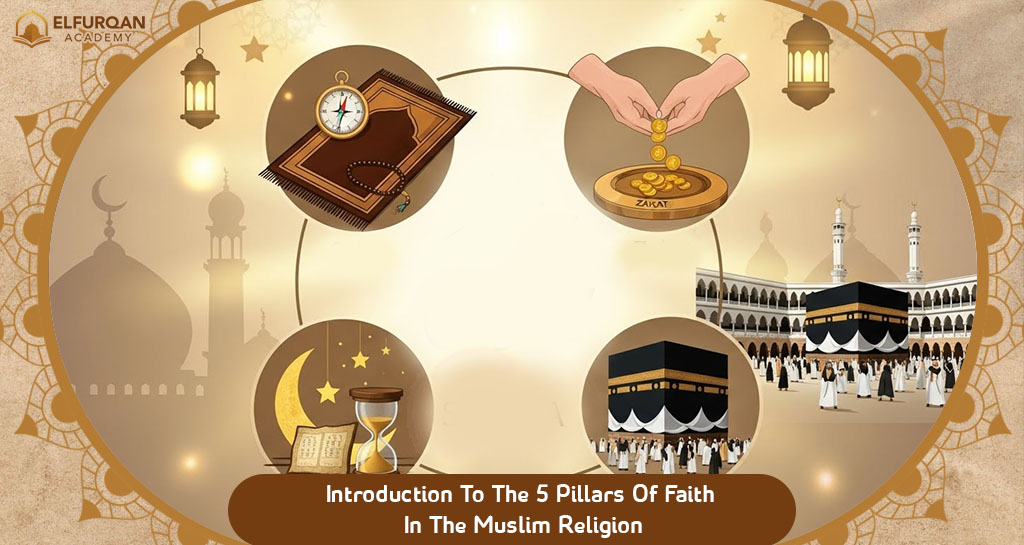
The 5 pillars of faith in the muslim religion form the foundation of Islamic practice and belief, guiding Muslims in both spiritual and everyday life. These pillars—Shahada (faith), Salah (prayer), Zakat (charity), Sawm (fasting), and Hajj (pilgrimage)—are essential to nurturing discipline, devotion, and moral character. El-Furqan Academy emphasizes the importance of understanding both the practical and spiritual aspects of each pillar. By learning the principles behind the 5 pillars of faith in the muslim religion, students can strengthen their connection with Allah and align their actions with Islamic teachings.
Each pillar has a distinct purpose but collectively they provide a balanced approach to spiritual growth. For example, while Shahada instills faith and belief, Salah fosters routine discipline and mindfulness. Zakat emphasizes social responsibility, Sawm develops self-control, and Hajj promotes humility and unity. At El-Furqan Academy, learners are taught to approach each pillar with sincerity, understanding its role in the larger framework of Islamic faith. This integrated approach ensures that the 5 pillars of faith in the muslim religion are practiced meaningfully rather than superficially.
Understanding the 5 pillars of faith in the muslim religion is not limited to memorizing definitions. It requires reflection, consistent practice, and a conscious effort to implement each pillar in daily life. El-Furqan Academy provides structured guidance, interactive lessons, and real-life examples to help learners internalize these practices. By integrating spiritual awareness with practical application, students develop a holistic understanding of Islam, laying the groundwork for lifelong devotion and ethical living.
Start Your Digital Marketing Journey Today with El-Furqan Academy
Join El-Furqan Academy now and unlock the skills you need to grow confidently in the world of digital marketing. Experience practical, hands-on training that helps you build real expertise and stand out in your career. Take the first step toward a successful future with a comprehensive learning path designed for all levels. Don’t wait—your transformation begins today with El-Furqan Academy!

Understanding Shahada As The First Pillar Of Faith
The first of the 5 pillars of faith in the muslim religion, Shahada, represents the declaration of faith: bearing witness that there is no deity but Allah and that Muhammad is His messenger. This pillar is the cornerstone of a Muslim’s belief system, emphasizing absolute devotion and recognition of God’s oneness. El-Furqan Academy provides detailed lessons on Shahada, explaining its spiritual significance and how it shapes a Muslim’s worldview, morality, and daily choices.
Shahada is more than a verbal declaration; it is a commitment to live by Islamic principles. Students at El-Furqan Academy learn that sincerely embracing Shahada influences every action, thought, and interaction. By understanding the depth of this pillar, learners appreciate its role in guiding ethical behavior, reinforcing faith, and fostering accountability. Practicing the first pillar correctly strengthens spiritual awareness and prepares the learner to implement the remaining pillars effectively.
Additionally, Shahada serves as a unifying principle for Muslims worldwide. It creates a shared sense of identity and belonging, connecting believers across cultures and generations. At El-Furqan Academy, learners explore the historical, theological, and practical dimensions of Shahada, making the first of the 5 pillars of faith in the muslim religion both a personal and communal experience. This deep understanding ensures that faith is lived authentically rather than superficially.
Significance Of Salah In The Muslim Religion Today
Salah, the second of the 5 pillars of faith in the muslim religion, is the practice of ritual prayer performed five times daily. Salah serves as a direct link between the believer and Allah, providing structure, mindfulness, and spiritual nourishment. El-Furqan Academy teaches learners the importance of correct posture, recitation, and timing, ensuring that each prayer is performed with sincerity and accuracy. By practicing Salah consistently, Muslims strengthen discipline and foster a continuous connection with God throughout their day.
Beyond spiritual benefits, Salah offers psychological and social advantages. It promotes self-discipline, patience, and mindfulness while creating opportunities for communal bonding during congregational prayers. El-Furqan Academy emphasizes that observing Salah is not just ritualistic but a comprehensive exercise in devotion, reflection, and ethical consciousness. The regular rhythm of prayer helps believers internalize Islamic values and integrate them into daily routines, enhancing their overall spiritual growth.
Additionally, Salah reinforces the communal aspects of Islam. By attending mosque prayers or participating in group learning sessions, Muslims experience unity and shared devotion. At El-Furqan Academy, learners are guided to understand both the individual and collective significance of Salah. Through this approach, Salah is recognized as a cornerstone practice that gives life structure, spiritual meaning, and connection, making it an essential component of the 5 pillars of faith in the muslim religion.
Zakat: Its Importance And Role In Society
Zakat, the third pillar of the 5 pillars of faith in the muslim religion, is the practice of obligatory charity aimed at supporting the less fortunate. El-Furqan Academy teaches learners that Zakat is not only a financial obligation but also a means to cleanse wealth, develop empathy, and promote social justice. By giving a portion of one’s earnings, Muslims contribute to equitable distribution of resources, strengthen community ties, and fulfill a divine responsibility.
Zakat emphasizes ethical financial conduct and mindfulness about social inequality. Students at El-Furqan Academy explore the rules, calculations, and recipients of Zakat, understanding how it positively impacts society. By practicing Zakat regularly, believers cultivate compassion, humility, and social responsibility. This pillar transforms wealth into a tool for spiritual growth and societal welfare, demonstrating the practical importance of the 5 pillars of faith in the muslim religion.
Furthermore, Zakat encourages sustainable charity practices and reinforces collective solidarity. Communities that practice Zakat experience improved social cohesion and reduced poverty. El-Furqan Academy ensures that learners grasp both the spiritual and societal dimensions of Zakat. Understanding its significance helps Muslims appreciate how individual actions can contribute to broader ethical and social well-being, making this pillar a key aspect of living a faithful and responsible life.
Sawm And Fasting: Spiritual Benefits For Believers
Sawm, or fasting during Ramadan, is the fourth of the 5 pillars of faith in the muslim religion. El-Furqan Academy emphasizes that fasting extends beyond abstaining from food and drink—it cultivates self-discipline, empathy for the less fortunate, and spiritual reflection. By controlling desires and focusing on prayer, believers develop patience, humility, and stronger moral character, enhancing their connection with Allah.
Fasting also serves as a physical and mental reset, promoting mindfulness in daily activities. At El-Furqan Academy, students are taught the health, social, and spiritual benefits of Sawm. Beyond personal growth, fasting fosters community spirit, as families and communities gather for Iftar and shared worship. These experiences reinforce the ethical and communal lessons of the 5 pillars of faith in the muslim religion.
Moreover, Sawm encourages reflection on the broader purpose of life. It is a period to evaluate habits, improve behavior, and strengthen devotion. El-Furqan Academy guides learners on practical ways to integrate fasting into daily life beyond Ramadan, encouraging consistency in spiritual practice. Through understanding and applying Sawm, believers experience growth in discipline, empathy, and faith.
Hajj And Pilgrimage: Completing The Five Pillars
Hajj, the pilgrimage to Mecca, is the fifth pillar of the 5 pillars of faith in the muslim religion. El-Furqan Academy teaches that Hajj represents submission, humility, and unity among Muslims worldwide. Performing this journey requires preparation, devotion, and adherence to rituals, fostering spiritual renewal and reinforcing the believer’s relationship with Allah.
Hajj also highlights equality and communal solidarity. Regardless of wealth, nationality, or status, all pilgrims stand together in worship. Students at El-Furqan Academy learn how this shared experience strengthens empathy, global Islamic identity, and spiritual consciousness. It serves as a culminating experience, connecting all previous pillars—faith, prayer, charity, and fasting—into a comprehensive practice.
Additionally, Hajj leaves a lasting impact on spiritual and ethical behavior. Pilgrims return with renewed commitment to moral living, devotion, and community service. By understanding the purpose and rituals of Hajj, learners appreciate the holistic structure of the 5 pillars of faith in the muslim religion and how each pillar integrates into a complete, meaningful spiritual journey.
How The 5 Pillars Strengthen Spiritual Discipline Daily
The 5 pillars of faith in the muslim religion collectively cultivate discipline, consistency, and mindfulness. El-Furqan Academy emphasizes that practicing each pillar daily or annually forms a structured framework guiding moral behavior, spiritual reflection, and ethical decision-making. Daily prayer, regular charity, and mindful living embody the teachings of these pillars in actionable ways.
Consistent practice of the pillars develops self-regulation and accountability. For instance, Salah reinforces punctuality, Sawm fosters self-control, and Zakat encourages regular assessment of wealth distribution. At El-Furqan Academy, students learn strategies to integrate these practices seamlessly into daily routines, making spiritual discipline an organic part of life.
Moreover, the pillars foster a holistic approach to spiritual growth. They create a balance between personal devotion and social responsibility, ensuring that faith manifests in ethical behavior and community service. By internalizing the lessons of the 5 pillars of faith in the muslim religion, learners develop a disciplined, fulfilling, and spiritually connected lifestyle.
Common Misconceptions About The 5 Pillars Of Faith
Despite their importance, misconceptions about the 5 pillars of faith in the muslim religion are common. Many assume that the pillars are solely ritualistic practices, overlooking their spiritual and ethical dimensions. El-Furqan Academy clarifies that each pillar is a multifaceted guide to living a moral, disciplined, and socially responsible life.
Another misconception is that beginners cannot practice all pillars simultaneously. El-Furqan Academy teaches that progressive learning is encouraged—one starts with understanding and practicing fundamentals before gradually incorporating advanced practices. This approach ensures both comprehension and sustainability of practice.
Finally, some believe that the pillars are outdated or irrelevant. El-Furqan Academy demonstrates their timeless value, highlighting how principles like prayer, charity, and fasting address spiritual needs, social justice, and ethical living. Understanding these truths reinforces the practical, spiritual, and communal significance of the 5 pillars of faith in the muslim religion.
Practical Ways To Implement The 5 Pillars Consistently
Consistency is key to mastering the 5 pillars of faith in the muslim religion. El-Furqan Academy suggests starting with structured routines—daily prayers, scheduled fasting, and regular charitable contributions—to develop habit and mindfulness. Small, consistent steps build long-term spiritual discipline and devotion.
Integrating reminders and community engagement helps reinforce practice. Joining study groups, attending classes, and participating in congregational prayers fosters accountability and motivation. El-Furqan Academy provides interactive guidance to support learners in maintaining consistent practice.
Finally, reflection and evaluation strengthen adherence. Journaling, self-assessment, and seeking mentorship allow learners to internalize the pillars and correct mistakes. By practicing the 5 pillars of faith in the muslim religion consciously, learners develop a meaningful, balanced, and disciplined spiritual life.
Role Of The 5 Pillars In Community Building
The 5 pillars of faith in the muslim religion foster social cohesion and ethical community engagement. Zakat encourages wealth redistribution, Salah promotes congregational unity, and Hajj builds global Muslim solidarity. El-Furqan Academy teaches learners how these practices translate into stronger, supportive communities.
Shared religious rituals and mutual support enhance understanding, empathy, and cooperation. Students explore how pillars like fasting and charity create opportunities to help others, strengthen bonds, and foster inclusivity. These practices demonstrate that personal devotion extends to social responsibility.
By integrating the pillars into communal life, believers contribute to ethical societies and harmonious living. El-Furqan Academy highlights how the 5 pillars of faith in the muslim religion balance personal spirituality with social well-being, creating a framework for compassionate and morally responsible communities.
Teaching Children About The 5 Pillars Of Faith Effectively
Educating children about the 5 pillars of faith in the muslim religion requires clarity, engagement, and gradual introduction. El-Furqan Academy emphasizes age-appropriate methods, including storytelling, interactive exercises, and practical examples, to help children understand each pillar’s purpose.
Routine reinforcement and modeling by parents and teachers help children internalize principles. Practicing Salah together, explaining Zakat, and observing fasting gradually instills understanding. El-Furqan Academy encourages supportive guidance and positive reinforcement to create lasting spiritual habits.
Children also benefit from contextualizing the pillars in daily life. By linking lessons to real-world actions and ethical choices, they learn to appreciate the pillars beyond rituals. This approach ensures that young learners grasp the meaning and relevance of the 5 pillars of faith in the muslim religion in an engaging, practical manner.
Modern Challenges And Relevance Of The 5 Pillars Today
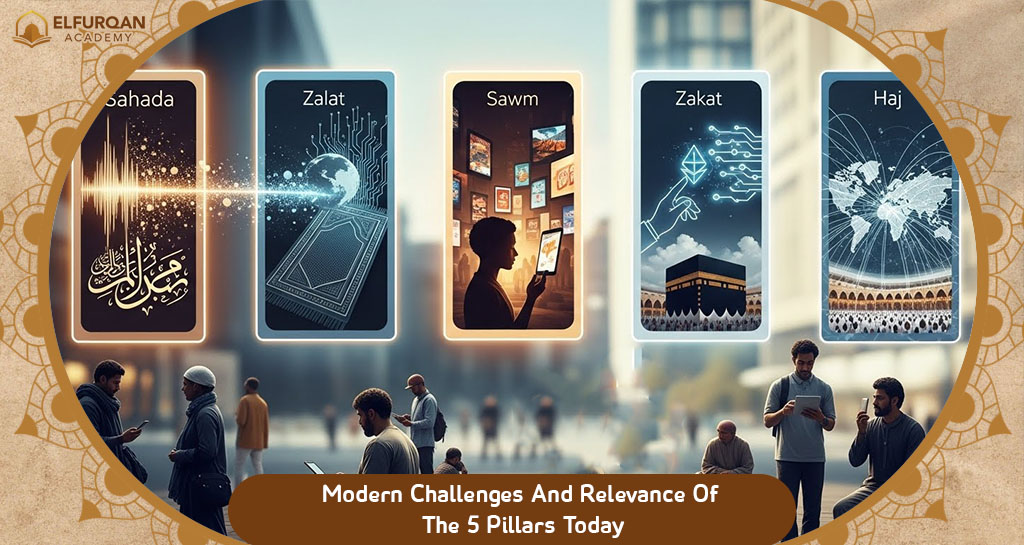
The 5 pillars of faith in the muslim religion remain highly relevant despite modern challenges such as busy lifestyles, cultural diversity, and technological distractions. El-Furqan Academy teaches strategies to integrate pillars into contemporary life without compromising spiritual integrity.
Balancing work, study, and family commitments can make consistent practice challenging. However, structured planning, digital tools, and supportive guidance enable learners to maintain adherence to prayer, fasting, charity, and reflection. El-Furqan Academy demonstrates that with intentional effort, modern Muslims can uphold the pillars effectively.
Furthermore, the pillars address universal human needs—faith, discipline, empathy, and community—making them timeless. Learning and practicing the 5 pillars of faith in the muslim religion fosters resilience, ethical living, and spiritual fulfillment, proving their enduring relevance in contemporary society.
Frequently Asked Questions About 5 Pillars Of Faith In The Muslim Religion
Understanding the 5 pillars of faith in the muslim religion can be easier when common questions are answered clearly. Below are six frequently asked questions with simple answers.
1. What are the 5 pillars of faith in the Muslim religion?
They are Shahada (faith), Salah (prayer), Zakat (charity), Sawm (fasting), and Hajj (pilgrimage).
2. Why are the 5 pillars important?
They guide Muslims in daily life, strengthen faith, and promote ethical and social responsibility.
3. Can children learn the 5 pillars effectively?
Yes, with age-appropriate teaching methods, storytelling, and practical reinforcement, children can grasp these principles.
4. How can beginners practice the 5 pillars?
Start with foundational practices, gradually integrating all pillars with guidance from knowledgeable instructors.
5. Do the pillars remain relevant today?
Yes, they provide discipline, spiritual growth, community cohesion, and moral guidance in modern life.
6. How does El-Furqan Academy support learning the pillars?
The academy offers structured lessons, interactive guidance, and practical examples to help learners understand and apply the pillars.
In conclusion, 5 Pillars Of Faith In The Muslim Religion – El-Furqan Academy serve as the cornerstone of Islamic life, guiding believers in their spiritual journey and daily actions. By observing these pillars, Muslims develop a disciplined routine, strengthen faith, and contribute positively to society.
El-Furqan Academy ensures that learners not only understand the rules and practices associated with each pillar but also appreciate their deeper spiritual meaning. Applying these pillars consistently enriches both personal growth and communal harmony.
With proper guidance, reflection, and dedication, every Muslim can experience the transformative power of the 5 Pillars of Faith, fostering a life rooted in devotion, compassion, and unwavering commitment to Allah.
Learn also: